
CSforAll-MN
CS Education Policy
Leadership and investment at the state level play an important role in advancing computer science education across all schools and students.
About CS Ed Legislation

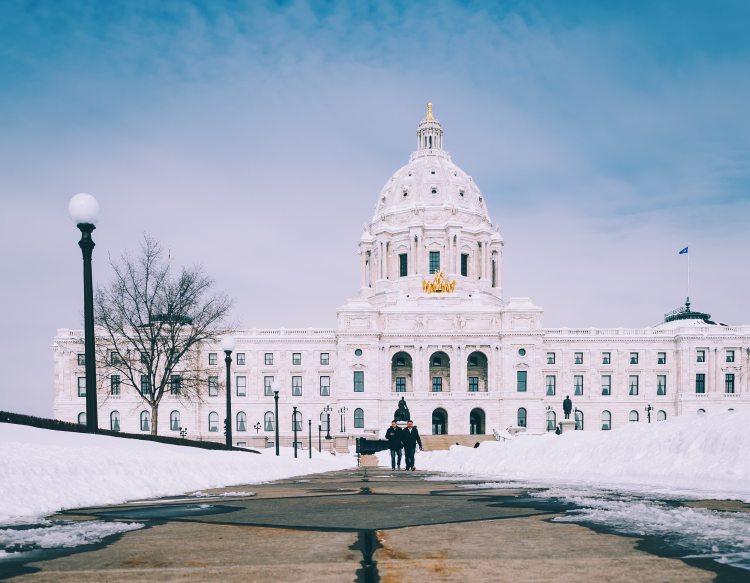
The 2023 Minnesota Computer Science Education Advancement Act (MN-CSEAA) provides initial resources to develop a plan and implement the expansion of computer science education in Minnesota. This legislation is a first step toward ensuring that all students have the opportunity to learn computer science and their teachers receive training to incorporate and teach computer science.
The 2024 CS Education Advancement bills request additional funding of $8 million to support computer science education in Minnesota.
LatLatest Updates
- Fall 2024: Policy Priorities for 2025 Session announced
- Spring 2024:
- Spring 2023:
- Summary of the CS Education Advancement Act signed into law on May 24th, 2023.
- MnTech’s CIOs for CS Education Advancement (letter signed by CIOs)
Need Statement
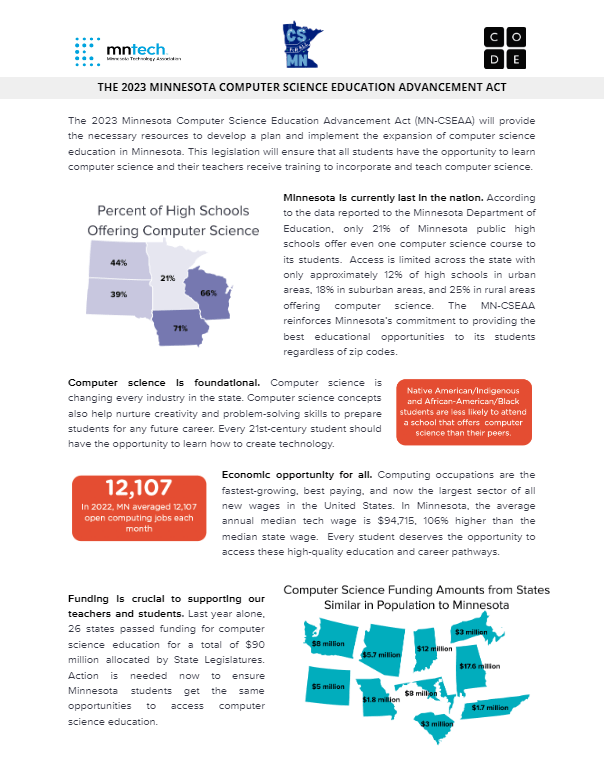
1-pager on why we need this legislation in Minnesota.
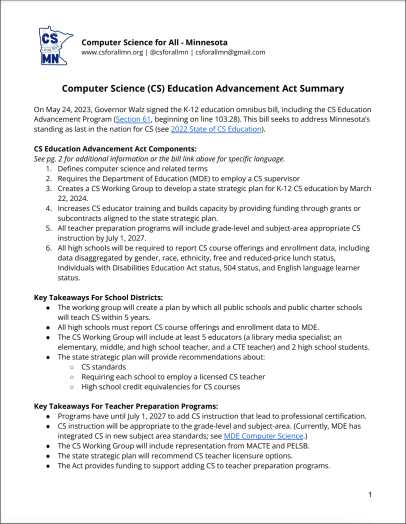
2023 CS Ed Advancement Act Policy Summary
2-page summary of the CS Ed policy included in the education omnibus bill.
Partner With Us!
CSforAll-MN looks to partner with policy makers to bring together state and local education agencies, representatives from the state’s executive branch, local computer science teacher leaders and industry leaders to discuss these ideas, identify which are viable and develop plans to implement them. Connect with CSforAllMN to learn more.

Minnesota is currently last in the nation. Only 28% of Minnesota public high schools offer even one computer science course to its students, according to the data reported to the Minnesota Department of Education. Access is limited across the state with only approximately 28% of high schools in urban areas, 36% in suburban areas, and 26% in rural areas offering computer science.
Through the advocacy efforts of national organizations, many states have adopted policies that support increased access to and participation in K-16 computer science. Code.org outlines nine recommended policies, and they are one indicator or measure of progress in K-12 computer science education. Minnesota has currently enacted only four of the nine policies.
Accomplishments
- Establish computer science supervisors in education agencies
- Allow computer science to satisfy a core graduation requirement
- Create a foundational blueprint for K-12 computer science
- Allocate funding for rigorous computer science professional learning
In the Works
- Implement clear pathways for computer science teachers (pending 2024 legislation)
Future Implementations
- Define a computer science and establish K-12 computer science standards
- Create preservice programs in computer science professional learning
- Require that all high schools offer computer science
- Allow computer science to satisfy higher education admission requirements

Supporters



 CSforAll MN